
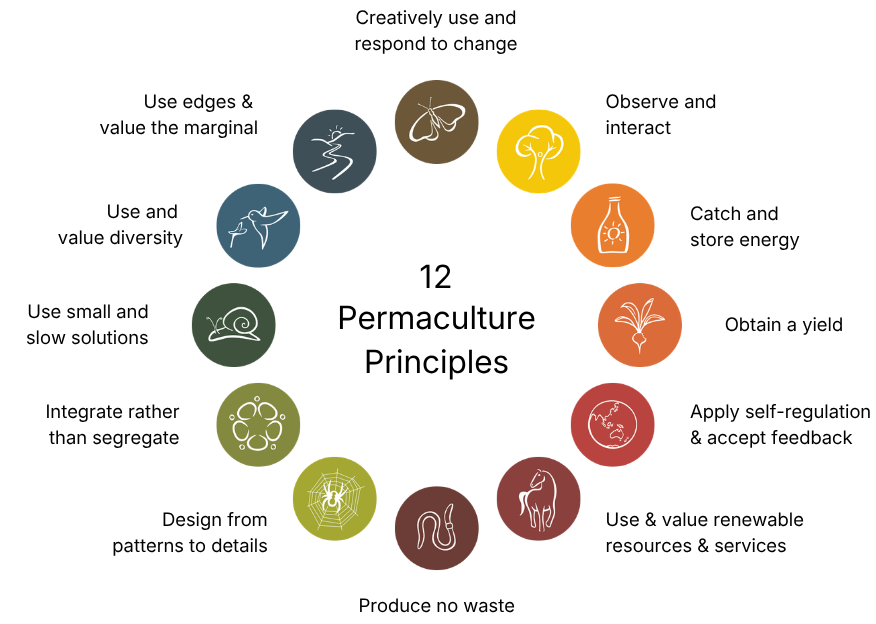
Permaculture is an ecology-based design method that aims to imitate and utilise natural processes to develop sustainable systems that meet the needs of individuals, communities, and the planet in the short and long term. These systems can be, for example, systems related to food and energy production, housing, or the organisation of economic activity.
3 Ethical Principles
At the core of permaculture are three ethical principles that are always followed in permaculture design:
Caring for the land, forests, water, air, and living beings.
Caring for oneself, loved ones, and communities locally and globally.
Reasonably balancing consumption in relation to production and resources, and returning surpluses to the cycle.
12 Permaculture Design Principles
Permaculture design is based on a diverse set of general design principles, formed by observing the functioning of natural ecosystems and identifying patterns that emerge. By following these principles, it is possible to create systems that are productive, regenerative, and better able to adapt to changes in the environment.
Principle 1: Observe and interact
Beauty is in the eye of the beholder.
Principle 2: Catch and store energy
Make hay while the sun shines.
You can’t work on an empty stomach.
Principle 4: Apply self-regulation & accept feedback
The sins of the fathers are visited on the children unto the seventh generation.
Principle 5: Use & value renewable resources & services
Let nature take its course.
A stitch in time saves nine.
Waste not, want not.
Principle 7: Design from patterns to details
Can’t see the forest for the trees.
Principle 8: Integrate rather than segregate
Many hands make light work.
Principle 9: Use small and slow solutions
The bigger they are, the harder they fall.
Slow and steady wins the race.
Principle 10: Use and value diversity
Don’t put all your eggs in one basket.
Principle 11: Use edges & value the marginal
Don’t think you are on the right track just because it’s a well-beaten path.
Principle 12: Creatively use and respond to change
Vision is not seeing things as they are but as they will be.